

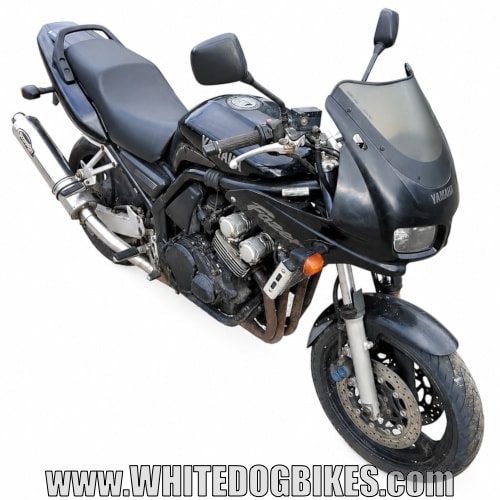
2001 Yamaha FZS600 Fazer 5DM model in black
The Yamaha FZS600 Fazer was developed in the late 1990s as a practical, road focused alternative to the sport oriented YZF600R Thundercat, offering accessible performance and everyday usability.
Launched in 1998 and later replaced by the fuel injected FZ6, it became a standout middleweight thanks to it’s detuned YZF600R engine, strong handling and good value.
The Fazer even inspired dedicated one-make race series (Yamaha Fazer Cup), proving it’s capability beyond it’s role as a strategically designed parts bin model.
Need parts for your Fazer? Yamaha 600 Fazer used parts…
Yamaha FZS600 Fazer Specs
Basic model info
| Basic model info… | |
|---|---|
| Manufacturer: | Yamaha |
| Model: | FZS600 Fazer |
| Model code: | 5DM / 5RT |
| CC: | 599cc |
| Engine type: | Inline 4 cylinder (4 stroke) |
| Years in production: | 1998 to 2004 |
| Style of bike: | All rounder / sports commuter |
| Insurance: | Group 12 (of 17) |
| Preceded by: | None |
| Replaced by: | Yamaha FZ6 |
Panoramic view of a 2001 FZS600 Fazer
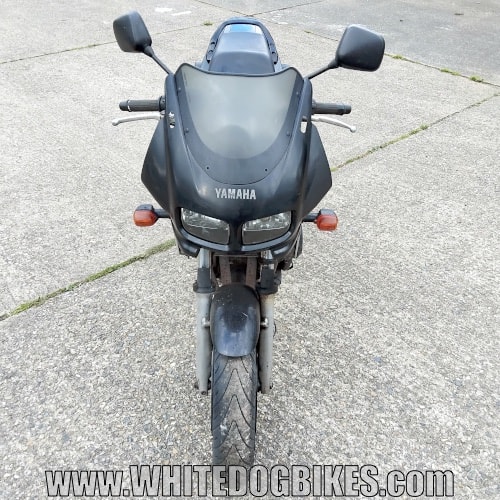
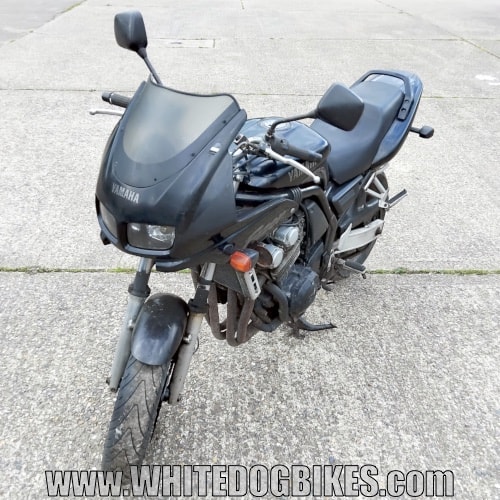
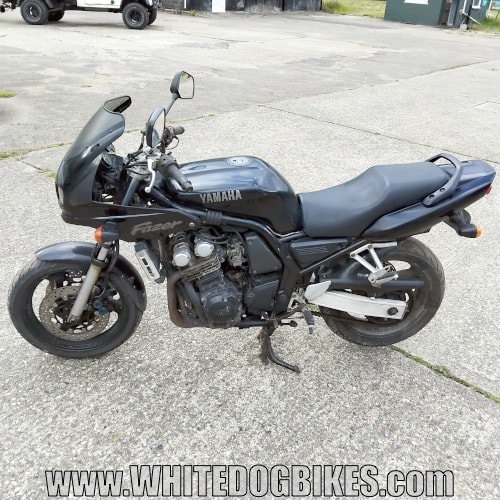
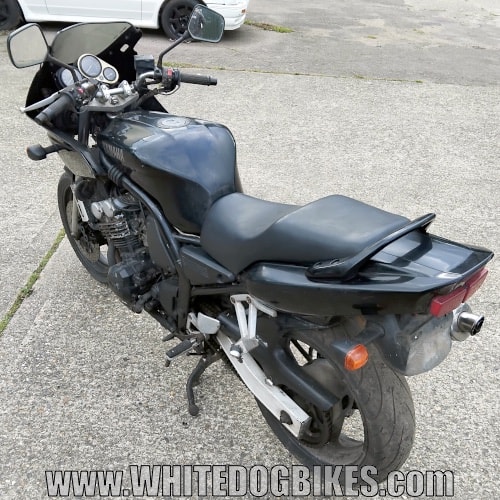
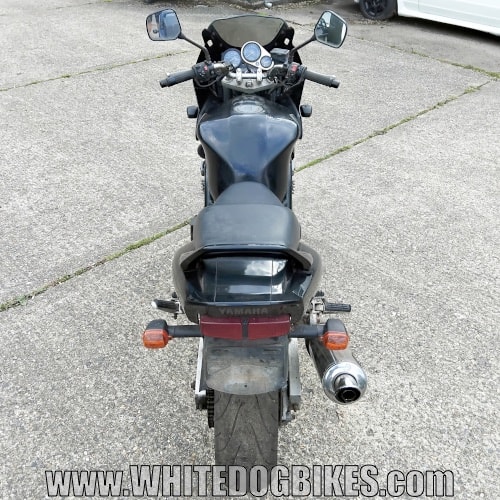
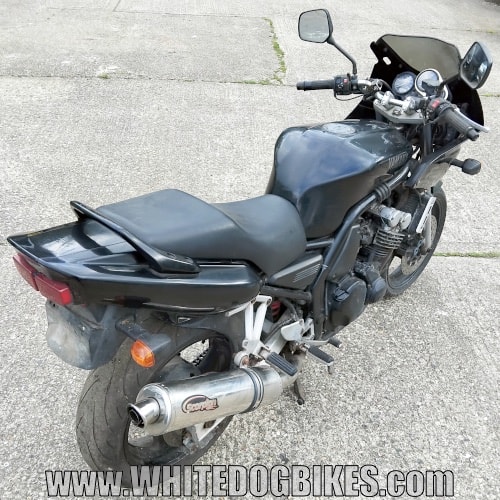
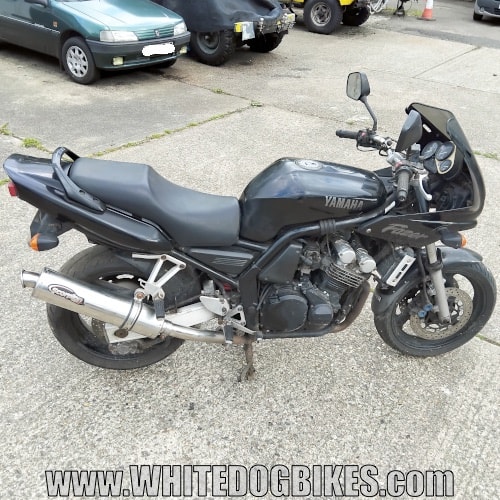
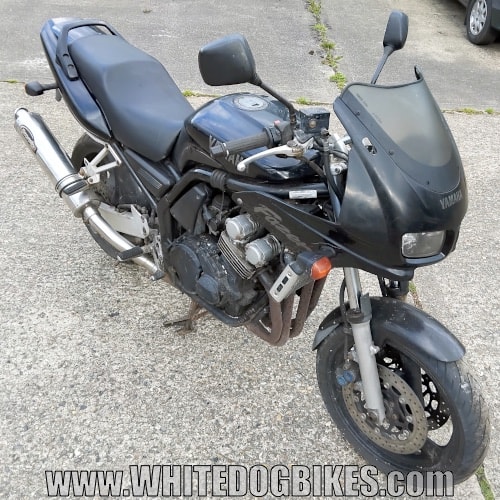
Panoramic view of a 2001 FZS600 Fazer 5DM model in black
Models, prices and years (in the UK)
| Models and Years (in the UK) | |
|---|---|
| FZS600 Fazer (5DM – Mar 1998 to Nov 1998) | |
| Frame number started: | |
| Description: | Half faired sports middleweight bike with double cradle frame, box section aluminium rear swing arm, 41mm forks and 17 inch, 3 spoke alloy wheels. It had a 599cc engine based on a detuned YZF600R Thundercat engine, 4-2-1 exhaust with stainless end can, dual square headlights, padded seat, and under-seat U-lock storage. |
| Available colours: | Black or red |
| Price (new): | £4,699 |
| FZS600 Fazer (5DM – Dec 1998 to Dec 1999) | |
| Frame number started: | |
| Description: | Same as above model, now available in additional colours. |
| Available colours: | Red, silver, black, or yellow |
| Price (new): | £4,699 |
| FZS600 Fazer (5DM – Jan 2000 to Dec 2001) | |
| Frame number started: | |
| Description: | Minor changes including bigger fuel tank (around 2 litres extra) and new seat. |
| Available colours: | |
| Price (new): | £4,849 up to 2000 (X reg) £4,999 for 2001 onwards |
| FZS600 Fazer (5RT – Jan 2002 to Sept 2002) | |
| Frame number started: | |
| Description: | Redesign with the foxeye headlight fairing from the FZS1000 Fazer, stainless steel exhaust downpipes, bigger fuel tank and new clocks. |
| Available colours: | Yellow, blue or silver |
| Price (new): | £4,799 |
| FZS600 Fazer (5RT – Oct 2002 to Jan 2003) | |
| Frame number started: | |
| Description: | Same as above model with the Yamaha tuning fork logo on the tank instead of the logo. |
| Available colours: | |
| Price (new): | £4,799 |
| FZS600 Fazer (5RT – Feb 2003 to Jan 2004) | |
| Frame number started: | |
| Description: | Same as above model. Production finished in 2003 but some models were registered up to early 2004. Model discontinued and replaced by the FZ6 due to failing to meet the new EURO 2 emissions standards. |
| Available colours: | |
| Price (new): | £4,799 |
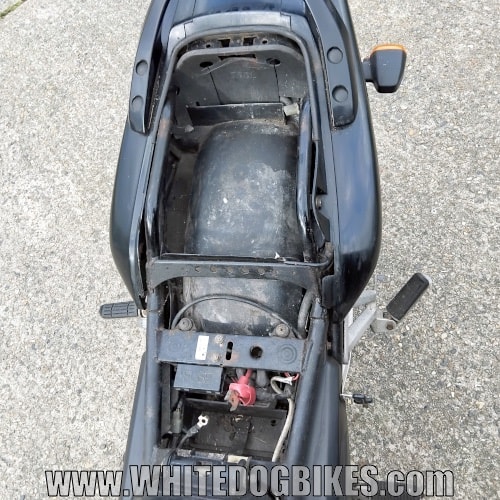
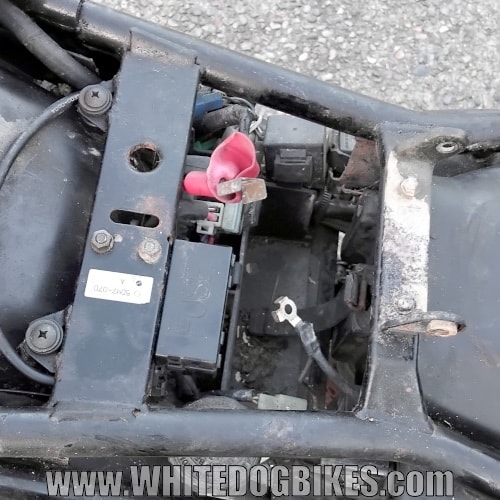
Yamaha FZS600 Fazer battery compartment and U lock storage area
Engine and gearbox specs
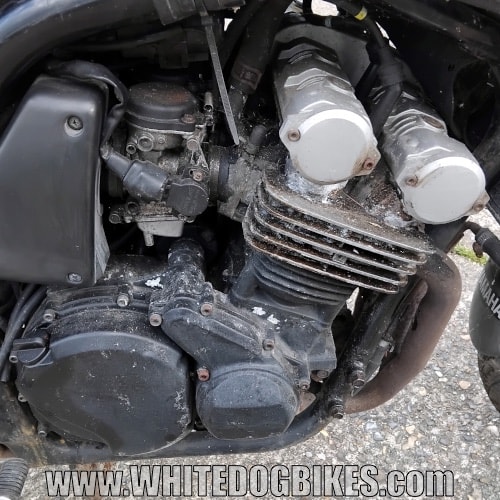
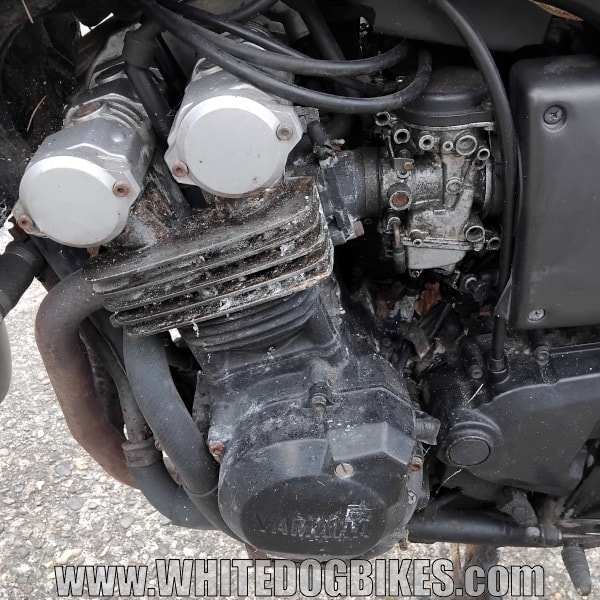
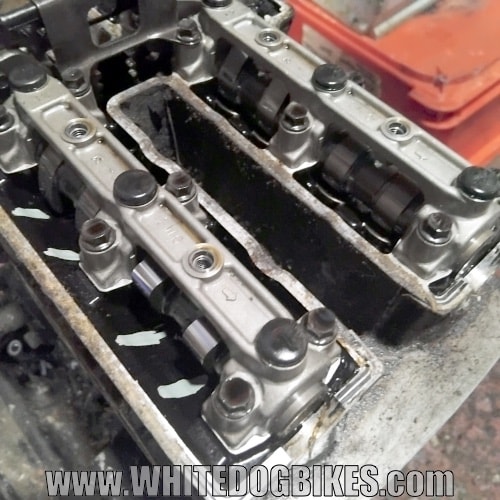
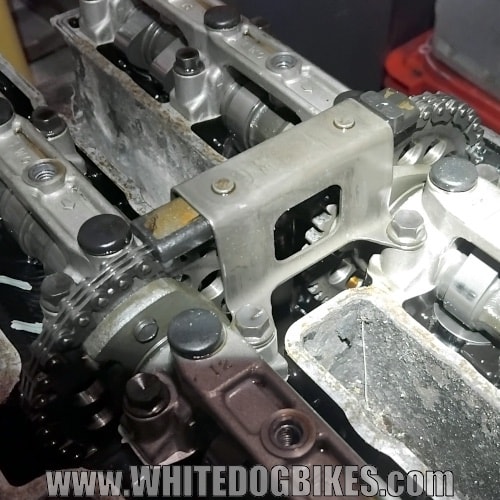
2001 Yamaha FZS600 Fazer engine and cylinder head
| Engine and gearbox specs….. | |
|---|---|
| Displacement: | 599 cc |
| Engine type: | Inline 4 cylinder |
|
|
| Stroke: | 4 stroke |
| Bore×Stroke: | 62 x 49.6mm |
| No. of cylinders: | 4 |
| Cam shaft configuration: | DOHC (double overhead cam) |

Double overhead cams in an ER5 engine |
|
|
|
| Compression ratio: | 12:1 |
| Cylinder compression pressure: | 12 to 15 bar (1200 to 1500 kpa or 174 to 218 psi) |
|
|
| Valves: | 16 valve (4 per cylinder) |
| Spark plug: | NGK CR8E (x4) |
| Spark plug gap: | 0.7 to 0.8mm |
| Spark plug torque: | 14nm |
| Spark plug socket size: | 16mm |
| Firing order: | 1 – 3 – 4 – 2 |
| Engine oil: | 10w40 API SG/JASO MA or higher |
|
|
| Engine oil capacity: | 2.7 litres (oil and filter change only) |
| Engine oil drain bolt location: | Bottom/left side of the engine |
| Engine oil drain bolt torque: | 43nm |
| Oil filter type: | Cartridge/paper type |
| Oil filter: | Hiflo HF147 / Filtrex OIF020 |
| Oil filter torque: | 17nm |
| Cooling system: | Liquid cooled |
| Cooling system capacity: | 1.95 litres |
|
|
| Clutch: | Wet (oil immersed) multiplate clutch |
| Clutch operation: | Cable |
| Clutch lever free play: | 10 to 15mm (measured at the lever end) |
| Gearbox: | 6 Speed manual (1st gear down, 2nd to 6th gears up, neutral between 1st and 2nd gears) |
| BHP: | 95 bhp |
| Torque: | 82.6nm (61ft/lb) |
| Top speed (claimed): | 135 mph |
| 0 to 60mph time (claimed): | 3.4 seconds |
| Quater mile time (claimed): | 12.8 seconds |
|
|
| Piston ring to cylinder bore clearance: | New: 0.025mm / Max 0.050mm |
| Valve clearance (inlet): | 0.11mm to 0.20mm (when cold) |
| Valve clearance (exhaust): | 0.21mm to 0.30mm (when cold) |
| Idle speed: | 1,150rpm to 1250rpm |
Panoramic view of a Yamaha FZS600 Fazer with fairings removed
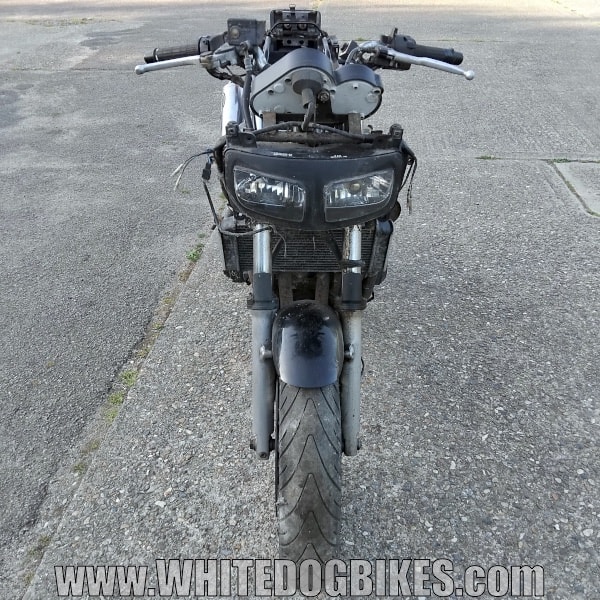
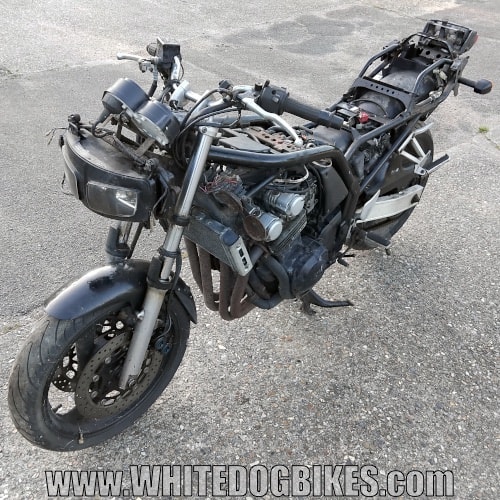
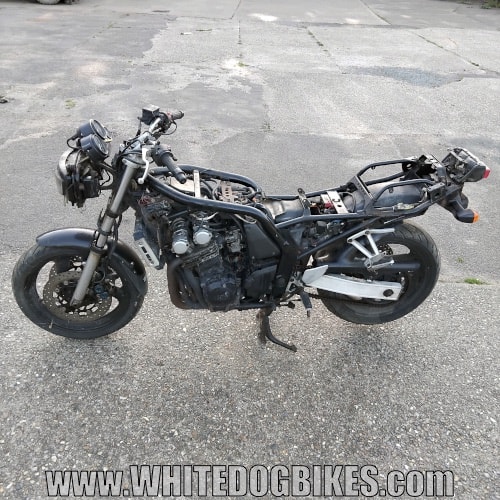
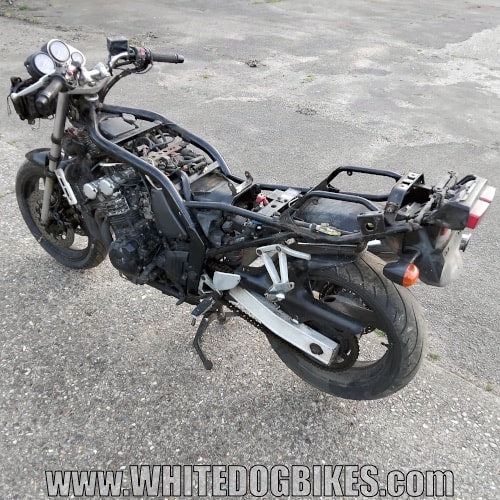
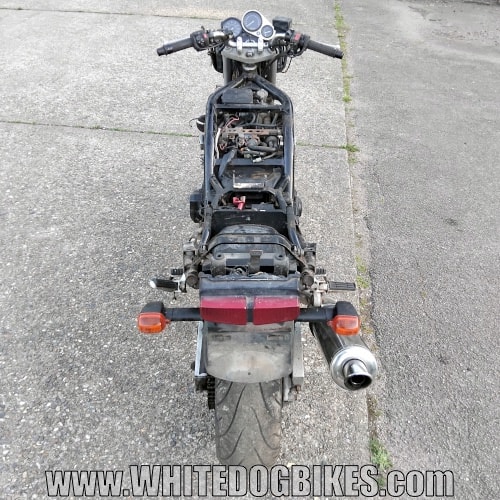
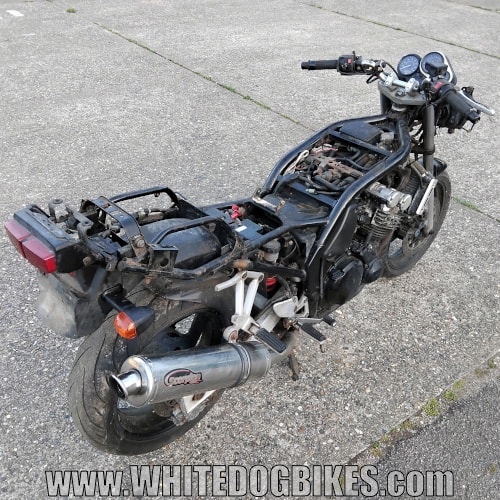
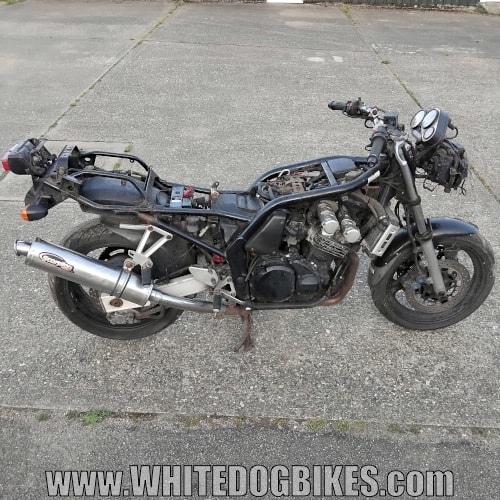
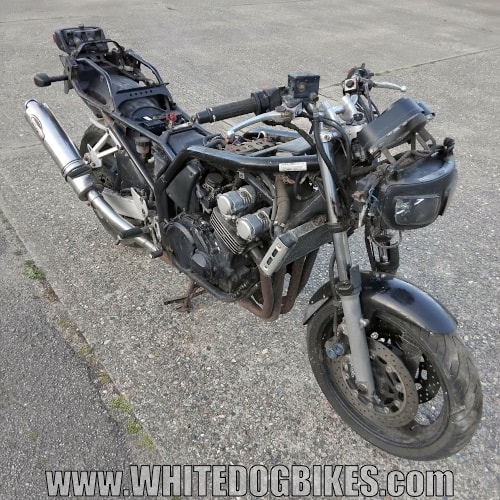
Panoramic view of a 2001 FZS600 Fazer 5DM with the bodywork/fairings removed
Final drive stuff
| Final drive stuff….. | |
|---|---|
| Final drive: | Chain |
| Front sprocket: | 15 teeth |
| Front sprocket nut torque: | 70nm |
| Rear sprocket: | 48 teeth |
| Rear sprocket nuts tightening torque: | 60nm |
| Chain pitch/length: | 530 pitch / 110 links |
| Chain free play: | 30 to 40mm |
| Chain stretch limit: | 150mm |
| Chain lubrication: | Chain lube |
|
|
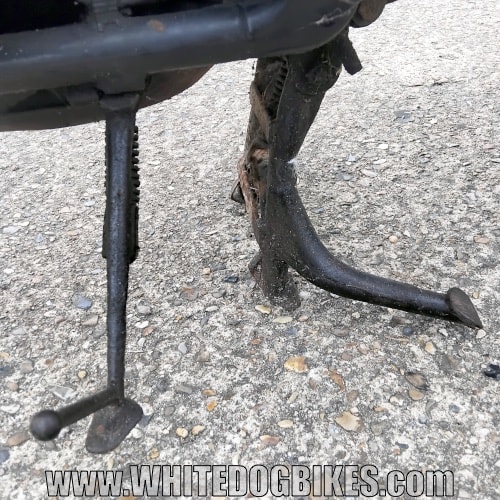
Side and main stands on a Fazer 600
Top views of a Yamaha FZS600 Fazer
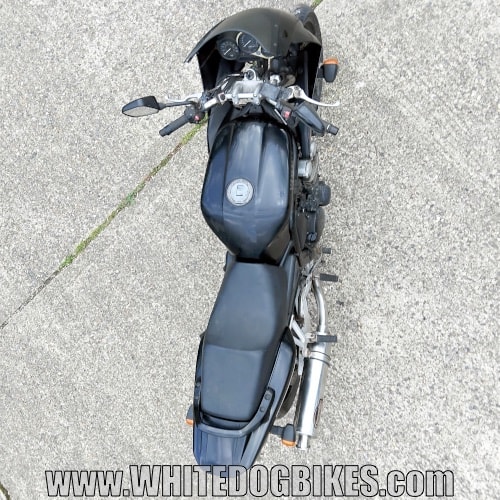
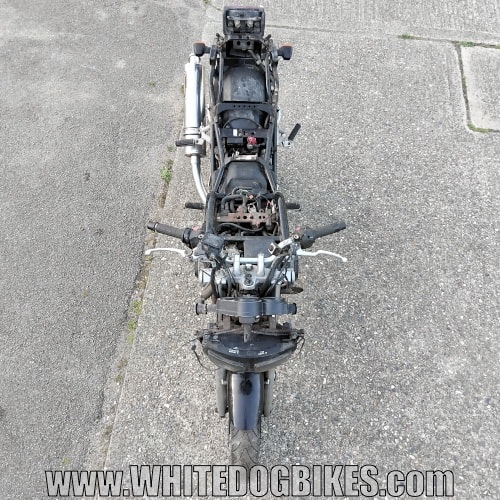
Top views of a 2001 Fazer 600 with the fairings on and removed
Carb, fuel and oil stuff
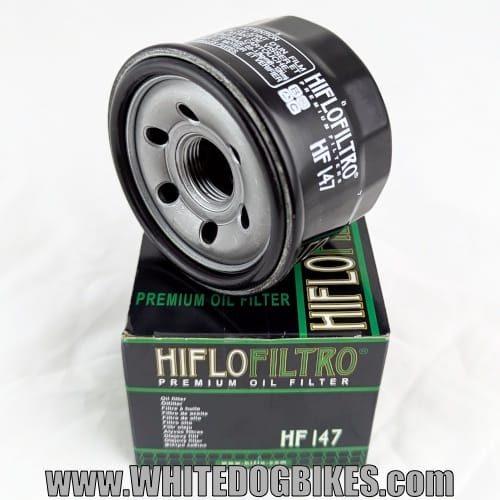
Yamaha FZS 600 Fazer Hiflo HF147 canister oil filter
| Carb, fuel and oil stuff….. | |
|---|---|
| Fuel system: | Carburetor |
| MPG (average): | 45 to 55 miles per gallon (very approx) |
| Fuel tank range (approx): | 140 to 180 miles |
|
|
| Fuel tank capacity (1998 to 1999 models): | 18 litres |
| Reserve cacacity (1998 to 1999 models): | 3.5 litres |
| Fuel tank capacity (2000 to 2001 models): | 20 litres |
| Reserve cacacity (2000 to 2001 models): | 3.5 litres |
| Fuel tank capacity (2002 onwards models): | 22 litres |
| Reserve cacacity (2002 onwards models): | 3.6 litres |
| Fuel type: | Unleaded petrol (95 octane grade – aka standard petrol from your local garage) |
|
|
| Carb make: | Mikuni (x4) |
| Carb type: | BDSR38 |
| Pilot screw opening: | 2 turns |
| Engine oil: | 10w40 API SG/JASO MA or higher |
|
|
| Engine oil capacity (oil and filter change only): | 2.7 litres |
| Engine oil capacity (after a complete engine dismantle): | 3.5 litres |
| Engine oil capacity (oil change only): | 2.5 litres |
| Engine oil drain bolt location: | Bottom/left side of the engine |
| Engine oil drain bolt torque: | 43nm |
| Oil filter type: | Cartridge type |
| Oil filter: | Hiflo HF147 / Filtrex OIF020 |
| Oil filter torque: | 17nm |
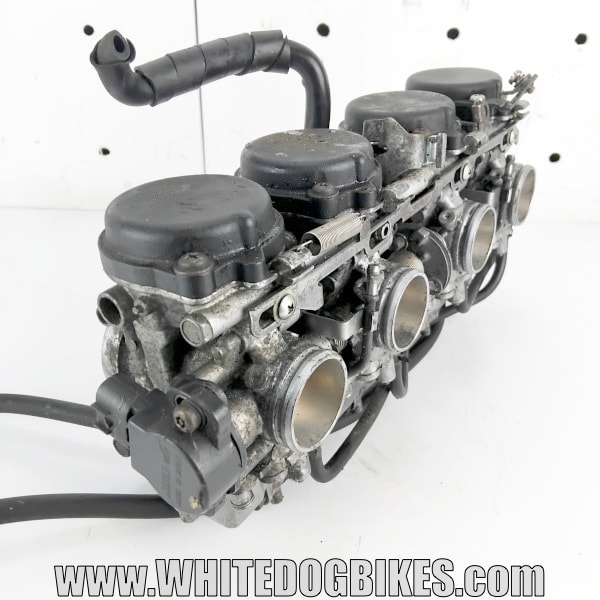
FZS600 Fazer Mikuni BDSR38 carbs
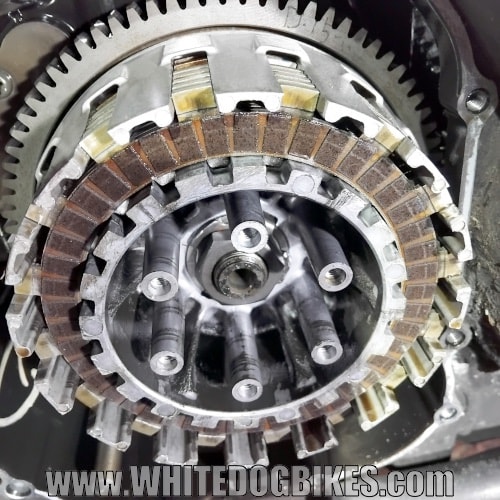
Yamaha FZS600 Fazer clutch basket inside the engine
Electric stuff
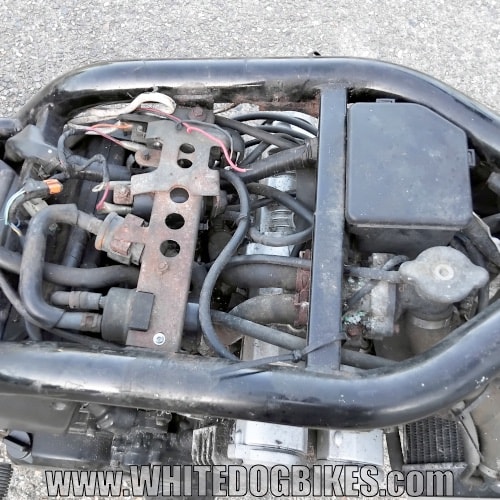
FZS600 Fazer spark plug coil location under the fuel tank
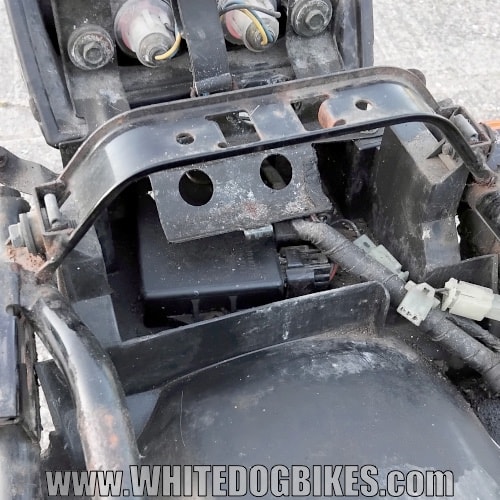
Yamaha FZS600 Fazer CDI unit location under the seat at the rear of the bike (just behind the back light)
| Electric stuff….. | |
|---|---|
| Ignition type: | Electronic CDI (part no: 5DM-82305-01) |
| Starter: | Electric start |
| Electrical system voltage: | 12 volts |
| Battery will need charging if below: | 12.8 volts |
| Regulated voltage (GPZ500 A – Up to Jan 1994): | 14.1 to 14.9 volts |
| Spark plug: | NGK CR8E (x4) |
| Spark plug gap: | 0.7 to 0.8mm |
| Spark plug torque: | 14nm |
| Spark plug socket size: | 16mm |
|
|
| Spark plug ignition: | 2 x coil (part nos: 5DM-82310-00 and 5DM-82320-00) |
|
|
| Battery location: | Under the seat, at the back of the tank |
| Battery type: | Gel filled battery |
| Battery capacity: | 12 volts / 10.5 amp/hours (12v / 10.5ah) |
| Battery: | CT12B-4 / YT12B-4 / GT12B-4 (this battery is also known as a CT12B-BS / YT12B-BS / GT12B-BS) |
Notes: |
|
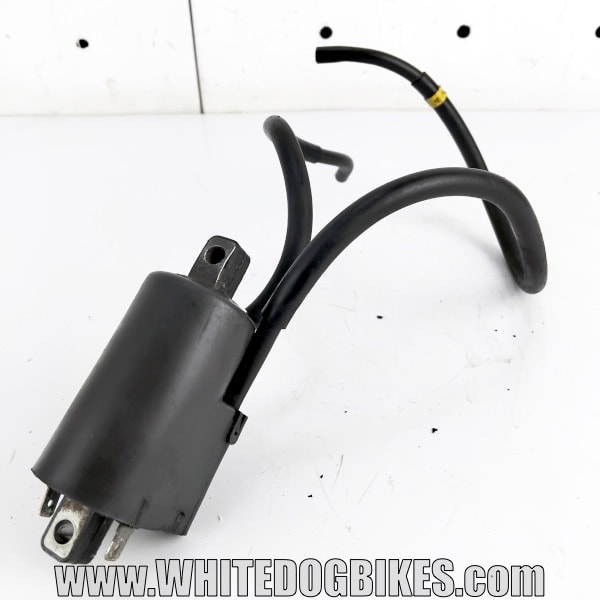
1 Of the 2 spark plug coils that are found under the tank
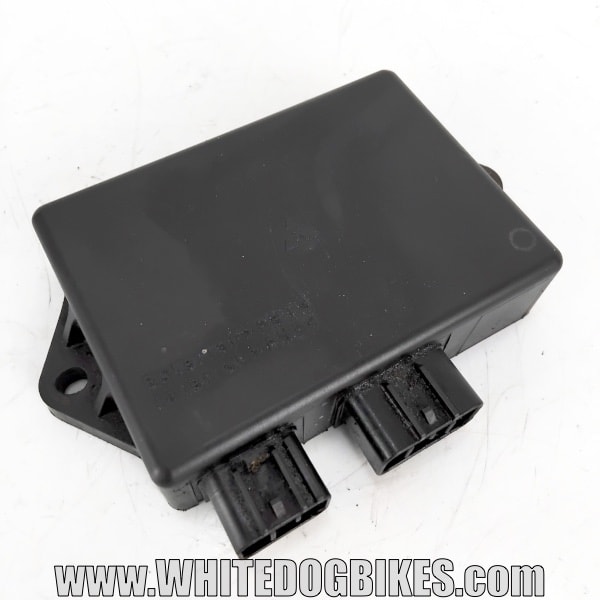
Fazer 600 CDI/ignitor unit
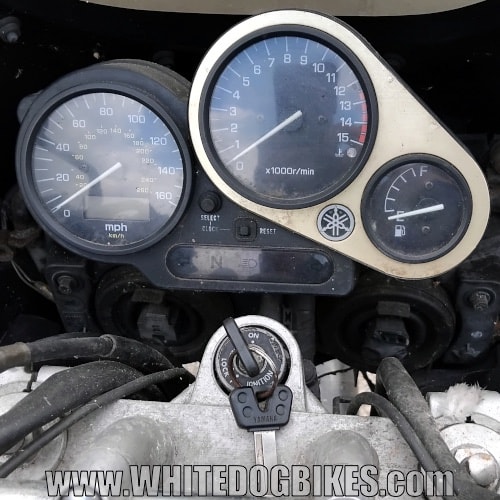
Fazer 600 clocks from a pre 2002 (facelift) model
Shocks, brakes and wheels
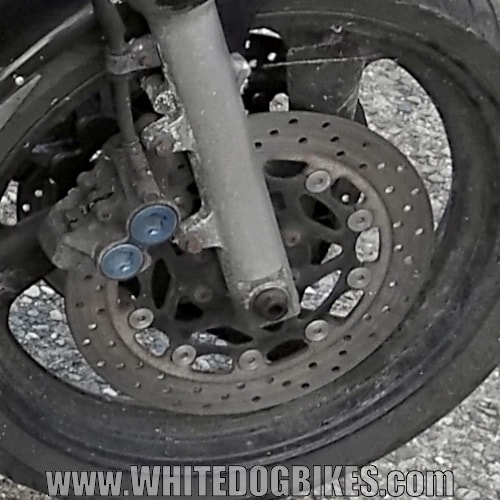
Front brake caliper on a Fazer 600
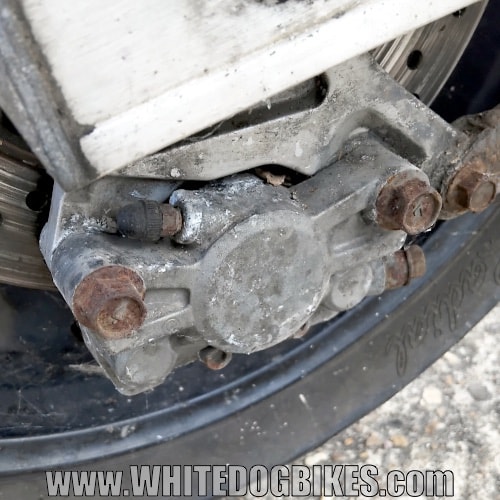
Fazer 600 back brake caliper
| Shocks, brakes and wheel specs….. | |
|---|---|
| Front wheel type: | 3 spoke alloy wheel |
| Front tyre size: | 110/70-17 |
| Front tyre pressure (all load weights): | 32psi (2.25 bar) |
| Recommended min tread depth: | 1.6mm |
| Front wheel spindle torque: | 67nm |
| Front wheel spindle clamp bolt torque: | 20nm |
| Rear wheel type: | 3 spoke alloy wheel |
| Rear tyre size: | 160/60-17 |
| Rear tyre pressure (up to 90kg rider plus luggage): | 36psi (2.5 bar) |
| Rear tyre pressure (over to 90kg to 225kg rider plus pillion and luggage): | 40psi (2.8 bar) |
| Recommended min tread depth: | 1.6mm |
|
|
| Rear wheel spindle torque: | 117nm |
| Rear wheel spindle bolt/nut size: | 24mm bolt and 27mm nut |
| Front brake: | Twin hydraulic disc brakes with 4 piston calipers |
| Front brake caliper mounting bolt torque: | 40nm |
|
|
| Front brake disc: | 298mm floating discs. Part no: EBC MD2001X (2x) |
| Front brake pad: | EBC FA252 (2x) |
| Brake fluid (front): | DOT 4 brake fluid |
| Rear brake: | Single hydraulic disc brake with 2 piston caliper |
| Rear brake caliper mounting bolt torque: | 25nm |
| Rear brake disc: | 245mm single solid disc. Part no: EBC MD2002 (1x) |
| Rear brake pad: | EBC FA104 (1x) |
| Brake fluid (front): | DOT 4 brake fluid |
| Front suspension: | Telescopic forks |
| Front fork stanchion diameter: | 41mm |
| Recommended fork oil: | 10w fork oil |
| Fork oil volume: | 475ml (per fork) |
| Rear Suspension: | Single gas/oil filled shock absorber (monoshock) with adjustable preload |
|
|
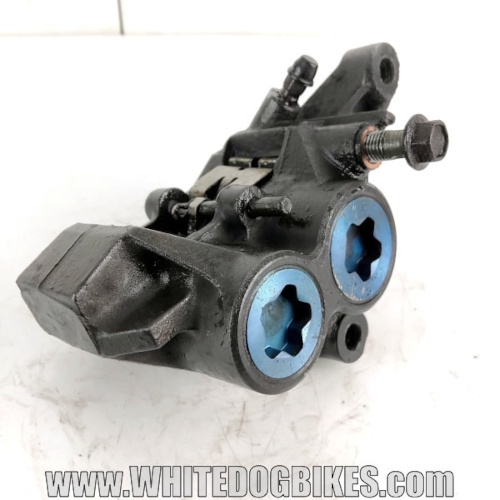
Right front brake caliper from an FZS600 Fazer
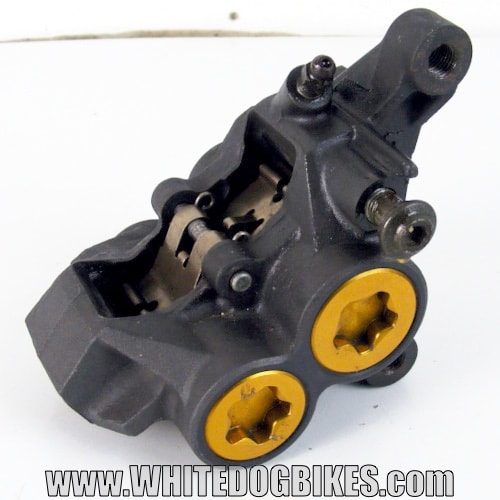
Yamaha YZF-R1 (2002 model) right front brake caliper
Note: The 2 images above show the same front brake caliper used on the YZF-R1 and FZS600 Fazer.
Weights and measurements
| Weights, measures n stuff….. | |
|---|---|
| Overall length: | 2080mm |
|
|
| Overall width: | 710mm |
| Overall height (1998 to 2001 5DM model): | Between 1170mm |
| Overall height (2002 to 2004 5RT model): | Between 1180mm |
|
|
| Wheelbase: | 1,415mm |
| Seat height: | 790mm |
| Ground clearance (min): | 130mm |
| Dry weight (without oils/fluids etc – 1998 to 2001 5DM model): | 189kg |
| Dry weight (without oils/fluids etc – 2002 to 2004 5RT model): | Approx 191kg |
|
|
| Wet weight (with oils/fuel/fluids – 1998 to 1999 5DM model): | 210kg (very approx!) |
| Wet weight (with oils/fuel/fluids – 2000 to 2001 5DM model): | 212kg (very approx!) |
| Wet weight (with oils/fuel/fluids – 2002 to 2004 5RT model): | 214kg (very approx!) |
|
|
| Turning radius: | 2.9 meters |
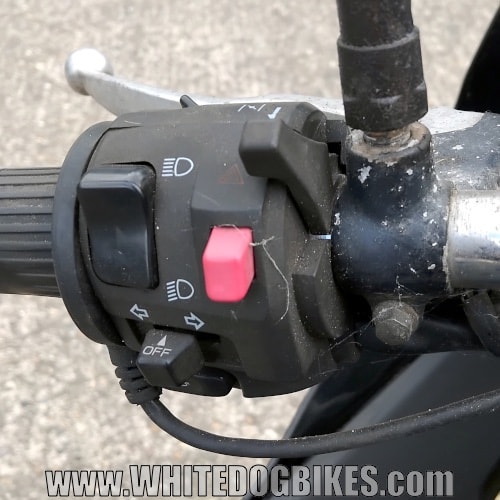
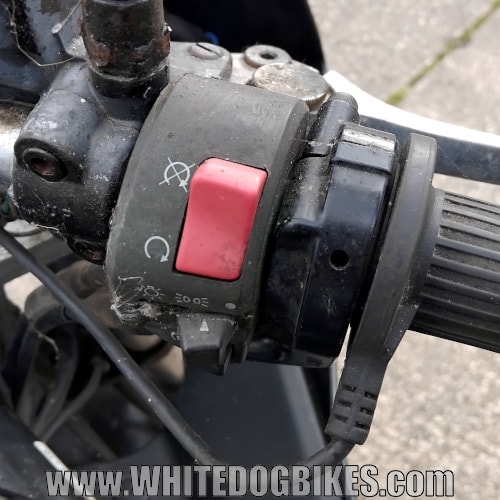
Fazer 600 handlebar controls showing starter button, light, horn, indicator control and kill switch
Useful torque settings
| Useful torque settings….. | |
|---|---|
| Brakes | |
| Front brake caliper mounting bolts: | 40nm |
| Front brake disc mounting bolts: | 23nm |
|
|
| Rear brake caliper mounting bolts: | 40nm |
| Rear brake disc mounting bolts: | 23nm |
| Chain and sprockets | |
| Engine/chain (front) sprocket nut: | 70nm |
|
|
| Rear sprocket nuts: | 60nm |
| Engine | |
| Camshaft cap bolts: | 10nm |
| Camshaft sprocket: | 24nm |
| Camchain tensioner cap: | 20nm |
| Chain tensioner mounting bolts: | 10nm |
| Clutch hub: | 70nm |
|
|
| Cylinder head bolts: | 35nm |
| Magneto (flywheel) mounting bolt: | 130nm |
| Oil drain plug: | 43nm |
| Oil filter torque: | 17nm |
| Spark plugs: | 14nm |
| Footpegs | |
| Front footpeg hanger bracket mounting bolts: | 55nm |
| Rear footpeg hanger bracket mounting bolts: | 28nm |
| Handlebars | |
| Handlebar clamp bolts: | 23nm |
| Stands | |
| Side stand bolt: | 23nm |
| Center stand nut: | 56nm |
| Suspension | |
| Front fork yoke steering head lower ring nut (initial tightening torque): | 52nm |
| Front fork yoke steering head lower ring nut (final tightening torque): | 18nm |
| Steering stem top (center) nut: | 110nm |
| Front fork yoke upper stanchion allen bolts: | 30nm |
| Front fork yoke lower stanchion allen bolts: | 30nm |
| Rear shock absorber upper bolts: | 40nm |
| Rear shock absorber lower bolts: | 40nm |
| Wheels | |
| Front wheel spindle bolt: | 67nm |
| Front wheel spindle clamp bolt: | 20nm |
| Rear wheel spindle nut: | 117nm |
|
|
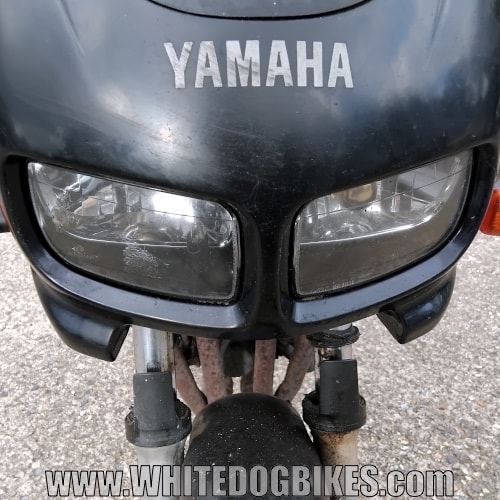
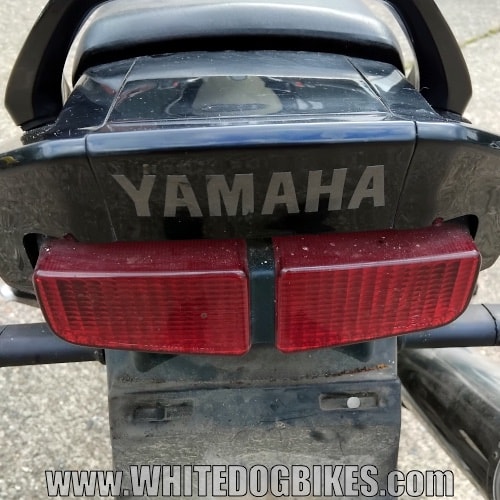
Headlight and rear light from a 2001 Fazer 600 (5DM model)
Servicing info
| Service stuff….. | |
|---|---|
| Servicing your bike? You’ll need a workshop manual… | |
| Engine oil | |
| Engine oil change frequency: | Every 6,000km (approx 3,728 miles) or 6 months |
| Engine oil: | 10w40 API SG/JASO MA or higher |
| Engine oil capacity (oil and filter change only): | 2.7 litres |
| Engine oil capacity (after a complete engine dismantle): | 3.5 litres |
| Engine oil capacity (oil change only): | 2.5 litres |
| Engine oil drain bolt location: | Bottom/left side of the engine |
| Engine oil drain bolt torque: | 43nm |
| Oil filter: | Hiflo HF147 / Filtrex OIF020 |
| Oil filter torque: | 17nm |
| Chain drive | |
| Chain lubrication: | Chain lube |
How often should you lube the chain? |
|
| Hydraulic brake system (front and rear) | |
| Brake fluid check frequency: | Check every 6,000km (approx 3,728 miles) |
| Brake fluid change frequency: | Change every 24 months or 24,000km (approx 14,912 miles) |
| Brake fluid: | DOT 4 brake fluid |
Note: Brake fluid is hygroscopic (which means it absorbs moisture from the air) and becomes less effective over time. |
|
| Fork oil | |
| Front fork oil check: | Every 6,000km (approx 3,728 miles) or 6 months |
| Front fork oil change: | 24,000km (approx 14,912 miles) or 24 months (ESTIMATED!) |
| Recommended fork oil: | 10w fork oil |
| Fork oil volume: | 475ml (per fork) |
Note: The standard capacity stated by Yamaha was 475ml per leg for the 1998 to 2001 models. |
|
| Cooling system | |
| Change every: | 20,000km (approx 12,427 miles) or 24 months |
| Cooling system: | Liquid cooled |
| Coolant check: | Every 6,000km (approx 3,728 miles) or 6 months |
| Coolant change: | Every 24,000km (approx 14,912 miles) or 24 months |
| Cooling system capacity: | 1.95 litres |
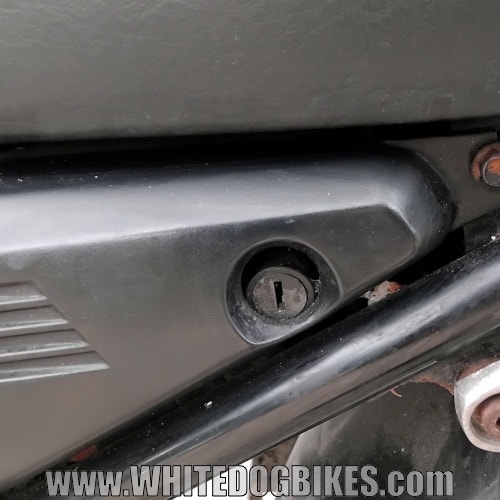
Fazer seat lock location on the left side panel
Frame number location
Frame number location…..The frame number is usually stamped onto the right side of the headstock (the front part of the frame just below the handle bars).
There is also a frame number sticker/plate on the right side of the frame just below the front of the petrol tank.
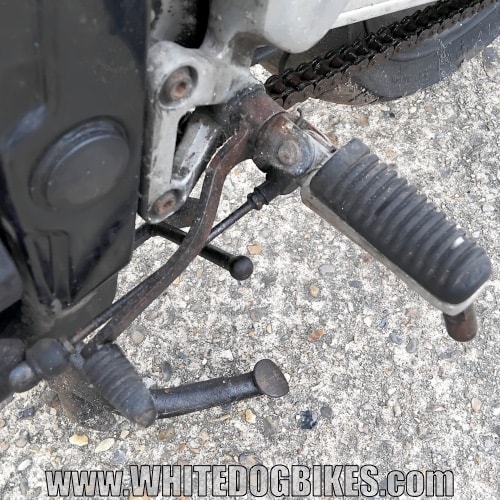
Gear shift pedal on a 2001 Yamaha Fazer
Useless Info
Released in 1998, the Yamaha FZS600 Fazer was manufactured by Yamaha up until July 2003 (although new bikes were registered up till January 2004) and was developed by Yamaha to compete against the Suzuki GSF600 Bandit.
Yamaha developed the bike after realising that the 600 Bandit had greatly reduced sales for the XJ600 Diversion which had previously been one of the top sellers in the budget middleweight commuter class.
Although on the surface the Fazer seemed a bit of a ‘parts bin special’ (similar to the awful 86 to 88 FZ600, made using parts from other bikes), in reality it was a well developed bike that used the exact same 4 piston, monobloc Blue-Spot calipers from their flagship YZF-R1 superbike and the engine from the YZF600 Thundercat.
The engine was slightly detuned using smaller carbs to get a claimed 95bhp (the Bandit 600 at the time was 78bhp) and increase low to mid range power which led to the bike being able to go from 0 to 100mph in 7.8 seconds (which is actually faster than some modern twin cylinder middleweights like the MT07!).
Yamaha also added extra features not found on other middleweight commuter bikes like a stylish half fairing, centre stand, large underseat storage area (big enough to store a U lock) and a comfortable dual seat.
The Fazer 600 became one of the best selling motorcycles in the UK and Europe for 5 years running and proved popular with commuters, weekend riders and couriers.
The 600 Fazer even had it’s own short lived race series in France and other European countries called the Coupe Fazer (Fazer Cup).
In 2001 Yamaha released a larger version of the bike (the FZS1000 Fazer).
There was also a 400cc version of the Fazer released in Japan to meet the strict tiered licensing system over there.
Although popular right up till the end, manufacturing stopped in July 2003 when Yamaha realised the bike could not pass the European emissions laws coming into force in 2004 (Euro 2) as the Mikuni carbs would not meet the exhaust emissions standards.
Yamaha replaced the 600 Fazer with the cast frame, fuel-injected FZ6 Fazer in 2004.
Buying Advice
Overall, the FZS600 Fazer was a good and reliable bike and it’s not uncommon to see bikes with over 100,000 miles on the clock.
However, the bike was used by many all season/weather commuters and couriers who didn’t religiously maintain the bike and/or left it outside all year. Although the Fazer was capable enough to withstand most abuse, these types of bikes will all have the usual stuck/seized nuts and bolts, flaking paint and corroded surfaces.
As with any bike of this age the Fazer can suffer from the usual wear/tear and corrosion so always check the common parts like rear shocks (does it feel overly bouncy or rock hard?), fork stanchions (corrosion, pitting and leaking seals), exhaust downpipes (rust, also look for weld repairs) and dirty carbs (does the bike rev and go back to idle cleanly, are there any sign of fuel leaking from them etc).
There are also some specific problems Fazer owners have encountered which should be checked:
- Front sprocket nut failure –On the 1998 to 1999 (5DM) Fazer, the front sprocket nut was too thin and prone to working loose (this was a common problem on some Yamaha models at the time), so check behind the front sprocket cover for oil leaks, that the nut is the larger 12mm nut and that the locking washer has been fitted correctly.
Also check the sprocket hasn’t been welded to the shaft as this was a common way used to solve the issue of the sprocket coming loose! - Rattling clutch basket –Higher mileage bikes suffered from noisy (rattling) clutch baskets on idle (the sound should stop if the clutch lever is pulled in). Although not a major issue, if the vibration is too bad or the clutch basket is notched it will make gear changes clunky.
- Worn carb to engine (intake manifold) rubbers – This is a common issue with the Fazer as they wear and split over time leading to rough running. This is probably one of the parts that is best to buy new as 2nd hand ones are usually knackered or won’t have much life in them anyway.
However, the manifold joints are easily available and fairly cheap on sites like Amazon. - Exhaust downpipe rot –The original (pre 2002) exhaust headers and collector box were mild steel so you are unlikely to find a bike that hasn’t had them replaced. The later (post 2002, 5RT model) had stainless steel downpipes but the welds were mild steel which was prone to rust and rot from road salt.
- Exhaust stud nut corrosion –The stud nuts were prone to rotting making it a very difficult job to remove them. Also, the aluminium engine casing they’re mounted in can become brittle with age around this area so removing them can cause major damage to the cylinder head casing!
- Rear shock and linkage bearings –The original shock absorber wasn’t very good, it was very soft and prone to being worn out after 20,000 miles. Also, because they were situated in the road spray area from the rear wheel, the shock linkage was prone to seizing if not regularly greased.
- Fork stanchion pitting –Common on most bikes of this age, always check the fork stanchions for rust, corrosion and pitting, especially in the area of travel.
- Regulator/rectifier failure –A common issue on Yamaha’s of this age as the reg/rec was prone to overheating and failing.
Note: A common sign the reg/rec has failed is the battery will be flat when you go to start the bike as a failed reg/rec will stop the bike from charging the battery when running.
Ideally, you should check the reg/rec with a volt meter connected to the battery terminals, if the reg/rec is healthy the volts should increase as the revs increase (up to approx 14.5 volts), if the volts go down as the revs increase (especially if they go below 12 volts) it may indicate a problem with the reg/rec.
A simple test to check if the reg/rec is working properly is to rev the motorbike with the headlight on, if it’s not working, the lights should get dimmer as the revs increase (this isn’t a foolproof method of testing though!). - Brake caliper corrosion and seizing –The rear calipers were prone to seizing, especially the bleed nipples (there were 2 on the rear caliper) due to it being mounted under the swing arm which meant it was prone to getting sprayed with road grime.
The front calipers, although good can also seize as road grime can build up behind the dust seals.Note: A simple test is to put the bike on the centre stand, put a weight on the pillion seat to raise the front wheel and spin it, apply the front brake and spin again, the wheel should spin freely, if it doesn’t or you can hear the brake pads rubbing excessively it may indicate a problem with the calipers.
- Lumpy feeling steering head bearings –This is a common problem on many bikes (not just Yamaha’s and Fazers). The original loose ball bearings in the steering head wear quickly and develop a distinct notch in the dead centre position.
If they’ve been replaced already, upgrading to tapered roller bearings is standard practice during replacements. - Petrol tank deforming and rusting –Although the tank didn’t seem to rust badly, check for leaks as, probably due to age, the tank can develop small holes due to rust which causes the petrol to leak out.
The 1998 to 1999 Fazer also had a problem with the petrol tank deforming due to a blocked or kinked air inlet line from the tank. If the vent got blocked, the fuel pump created a powerful internal vacuum that can actually cause the metal sides of the fuel tank to implode/deform inward.Note: On 1998 to 1999 models, always pull the breather hoses down from below the right-hand footpeg after lowering the tank to ensure they haven’t kinked
Luckily, Yamaha sold LOADS of these bikes so there are plenty of spares around in breakers.
Happy biking 🙂
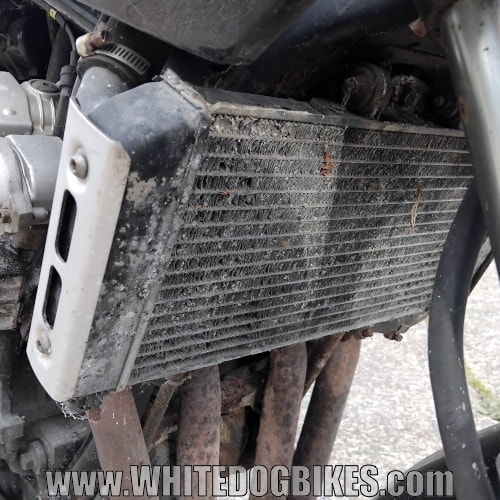
FZS600 Fazer radiator mounted on the bike
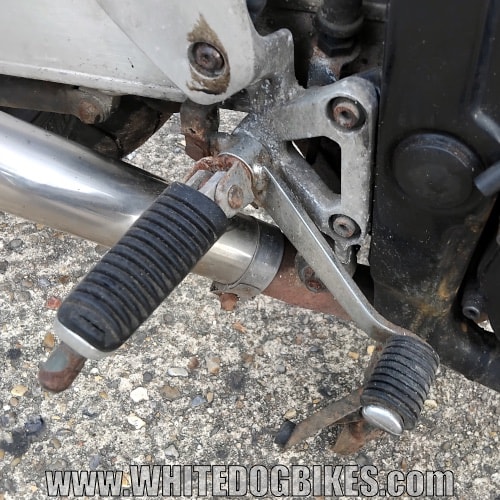
Back brake (right/off side) pedal on a 2001 Fazer 600
Sources / Thanks to / Useful sites:
Whitedogbikes – Yes, we measured the damn thing!
Rock oil for the servicing info
FZS600 Fazer article on Wikipedia
Keep up to date by joining us on our social media pages:


Disclaimer: The information on this page is correct to the best of our knowledge. But the info should NOT be taken as 100% accurate as we can, occasionally make mistakes!
If you’ve got any questions, comments or suggestions please feel free to leave them below 🙂
Leave a Reply